
En quarante-cinq ans de formation en Aïkido, je n’ai eu désamorcer qu’un seul combat. Jamais un ninja furieux n’a cinglé son épée dans ma direction tout en proférant un cri à glacer le sang. (Eh bien, sauf dans…
En quarante-cinq ans de formation en Aïkido, je n’ai eu désamorcer qu’un seul combat. Jamais un ninja furieux n’a cinglé son épée dans ma direction tout en proférant un cri à glacer le sang. (Eh bien, sauf dans…
In forty-five years of Aikido training I have only had to break up one fight. Never has a furious ninja slashed his sword in my direction while uttering a blood-chilling cry. (Well, except in my samurai fantasy moments,…
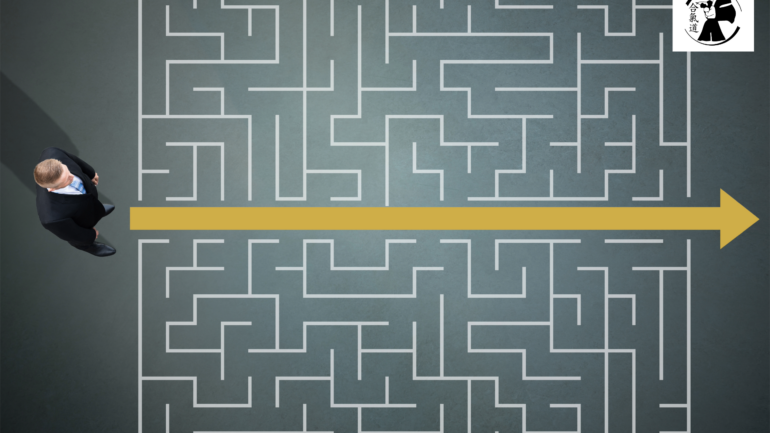
There are no shortcuts in Aikido. Deep understanding comes only through long years of practice. Nevertheless, just one year of dedicated training under a competent teacher with enthusiastic partners will provide a foundation of immediate use and lasting…
Aikido training involves almost continuous close contact with a variety of partners. Such intimate contact means that all of us need to practice good hygiene. Body and uniform should be clean, teeth brushed, and nails trimmed. This preparation…

Aikido is useful as part of an overall fitness program. The practice of techniques and the resulting fallsand then returning to one’s feet provide both aerobic and anaerobic exercise, especially once one becomes proficient enough to train at…
Masakatsu agatsu (正勝吾勝 true victory [is] self victory) is a phrase that orients Aikido toward mastery of oneself rather being concerned with winning a sports competition. Personally, I enjoyed playing hockey, basketball, football, etc., in my youth, and…
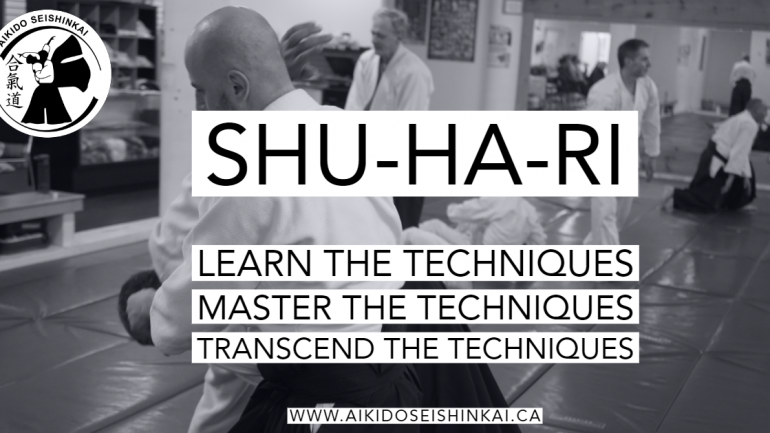
Shu-Ha-Ri is a concept of how to go from beginner to expert. At the beginning one tries to imitate the instructor’s techniques as closely as possible in order to develop familiarity with what might be quite new ways…
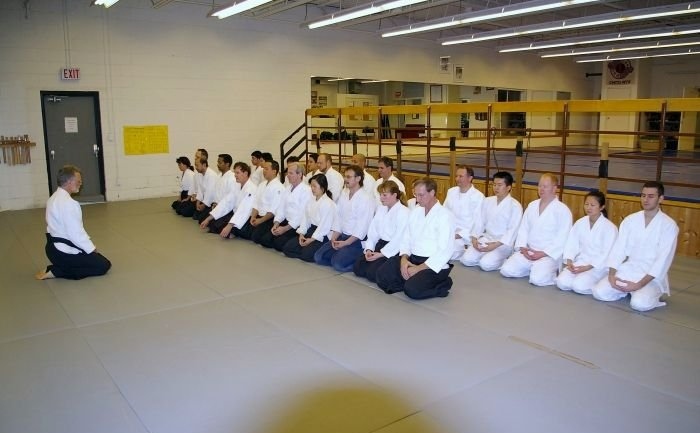
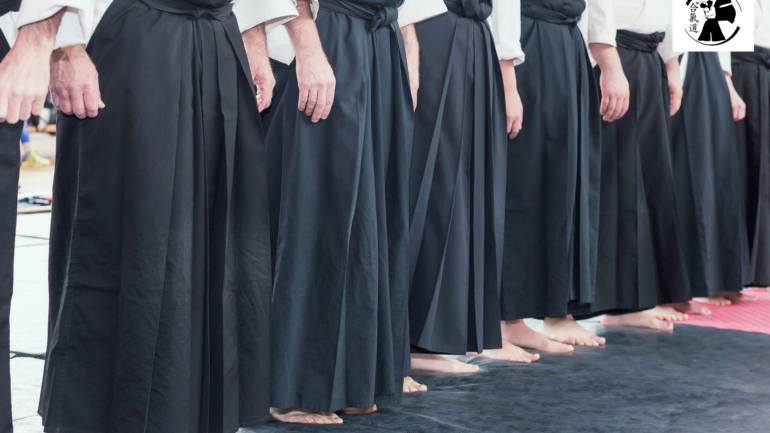
Why do we bow so much in Aikido? Why are we careful to line up the sandals neatly at the edge of the training mat? Why do we keep our uniforms tops tucked in securely? Why do we…
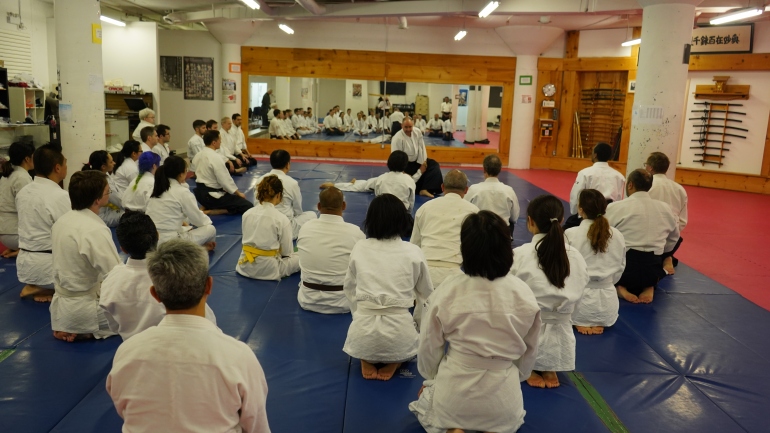
What is the right attitude when training? The Japanese term is isshokenmei. It originally meant “frantic” but now is used with the meaning of “whole-hearted”. When on the mat the Aikido student should be fully in the present,…
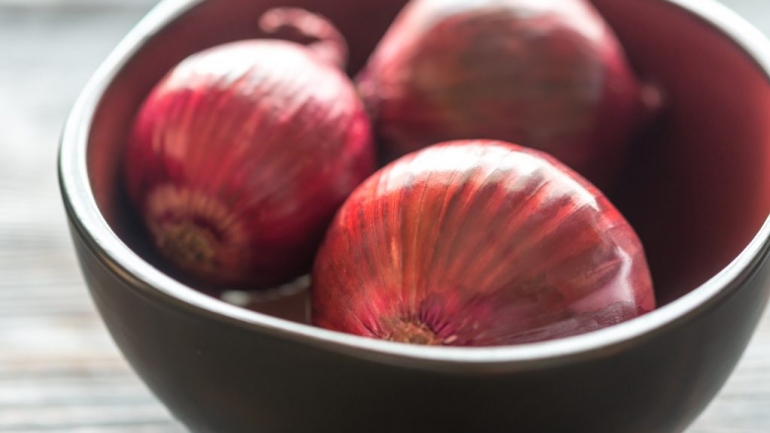
Aikido is like an onion. The outer layer consists of learning how the hands and feet move (tai sabaki and te sabaki). The next layer involves using the breath with each movement of the extremities (kokyu). Then comes the layer of…