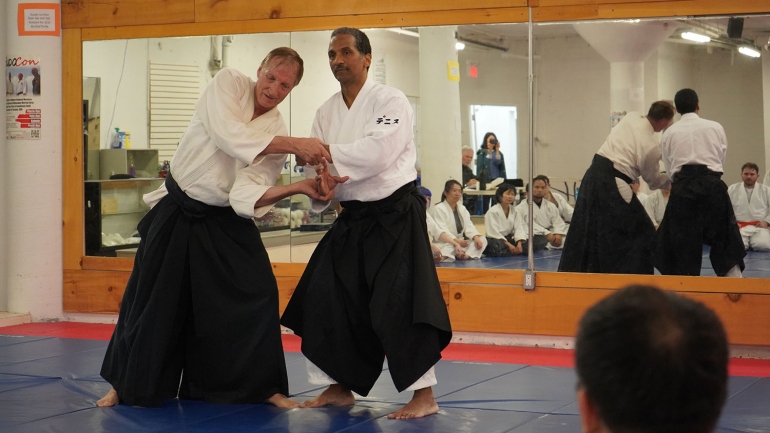


In March I suffered a health episode during the warm-up to an Aikido class being taught by a friend. When rolling gently on the mat, I suddenly could not get up. Although I was not experiencing the classic signs of a stroke (face drooping; arm immobility; speech distortion), I knew that something was seriously wrong.
I rapidly went through the classic phases of reaction: denial and anxiety. I could not believe that this was happening to me. My health was good, and I had had no previous symptoms. Then I became afraid that I was dying or about to become crippled. I might never see again those I love or I might become a burden to them.
My symptoms were not so severe that I could not signal my distress. Fortunately, the instructor was a retired nurse. She immediately recognized what was happening and called emergency services. The ambulance arrived quickly, and I was treated promptly in the hospital.
Thanks to first aid awareness, fast medical attention, and the loving support of family and friends, I have made a complete recovery and am able to return to full activity.
This episode is a reminder of the uncertainties that life presents. I encourage all Aikidoists to
obtain at least basic first aid training.
- Fear: This is often the first visceral reaction to an overwhelming reality. The American
Psychological Association notes that fear triggers an immediate state of shock, anxiety, and a feeling of helplessness as the brain tries to process the sudden shift in your circumstances. - Denial: Operating as a natural, temporary defense mechanism, denial cushions the immediate impact of the hardship. According to Harvard Health Publishing, this is not a sign of misunderstanding, but rather the mind refusing to accept reality to give you time to adjust.
- Acceptance: This marks the beginning of adaptation. As outlined by Remembering A Life, acceptance does not mean you are “happy” about a situation; rather, it is finding the capacity to acknowledge the new reality and integrate it so you can move forward.